
The Benefits of Grass
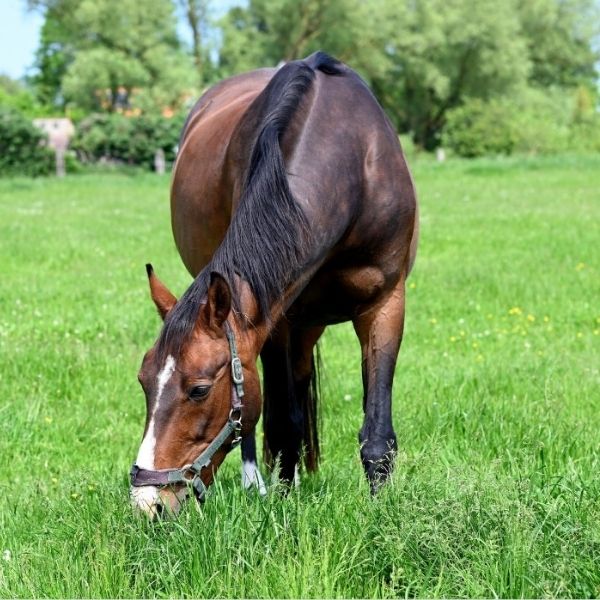
It isn’t the enemy; good pasture is the best natural nutrition for horses and should be the base food for every horse.
There are misconceptions that have developed, that horses ingest too much sugar from grass, and that horses ingest mycotoxins, both of which are the reason for horses not behaving perfectly, this article will disperse those myths and help provide some good balanced information to support the decisions about feeding your horse.
Many owners keep their horse off pasture and feed hay – well what is hay but dried grass with reduced vitamins and minerals!
New Zealand is very fortunate to have the space for pasture and the climate to grow quality grasses. It is the most economic food source especially if you are grazing on your own land.
The horse is a grazing animal, its digestive processing requires food to be regularly passing through the stomach and the gut, as acid is continually flowing in the stomach.
By comparison acid only flows in a human stomach when triggered by enzymes in the mouth. Empty stomachs are vulnerable to that acid and can result in damage to the stomach wall and potentially ulcers.
Allowing a horse to roam and graze is ideal and natural, however if this is not always possible, care must be taken to provide suitable and healthy alternatives.
What is the real difficulty with grass?
Many owners think that the grass has too much sugar and that creates too much energy and makes the horse difficult to manage.
This is a misconception, often called grass affected. This does not exist as a diagnostic condition. In fact, it is not about the sugars creating energy – it’s about the difficulty the horse has in digesting one of those sugars.
The sugars in grass are Fructose and Fructans, the former is a simple sugar – a monosaccharide, the Fructans is a complex carbohydrate – a polysaccharide.
Horses do need a source of energy, and the fructose provides that and isn’t a cause of any negative behaviour. However, fructans are difficult for the horse to digest in the small intestine and so pass on, mainly unprocessed through to the hindgut creating discomfort, i.e. gut pain from the release of lactic acid which is introduced to help complete the digestion. This release causes toxic particles to disperse through the gut wall, into the bloodstream and is a cause of grass laminitis.
So, it isn’t the grass itself that is the problem, but the difficulty the horse has in processing the fructans.
To understand the process of digestion – read our article on digestion.
To Resolve the Issue of the Fructans
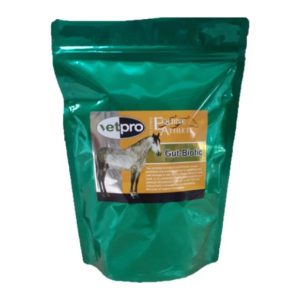
The easiest solution is to feed the horse a product that provides extra enzymes to improve digestion in the small intestine and with a specific prebiotic called Mannon oligosaccharide to absorb and excrete any toxic residue.
It is also helpful to understand how the grass uses and processes the sugars in order to grow. Pasture can become stressed and then that is a time when it produces more fructans.
- overgrazing
- poor soil nutrients
- climate either too cold or too hot, too wet or too dry
- trampled or mown too short.
The sugars start being created by a process called photosynthesis and that requires sunlight, so that process begins in the morning, and the sugars are being stored as the day progresses. After nightfall the grass uses the stored sugars to grow. So, the lowest levels are early in the morning, and the highest level is in the evening.With horses that are susceptible to excess carbohydrate intake, eg overweight or prone to laminitis, it is best to put them out to pasture as early as possible in the morning and in again later in the afternoon.They will need substituting with hay, but it should be washed to remove excess sugars, and supplementation will be needed with vitamin E and a mineral mix.
The Care of Pasture
Pasture sown for dairy cattle (high rye content), is not the ideal mix for horses. Rye grass produces high energy and high protein levels. It is often protected from weevil damage by having an endophyte added that protects the grass but unfortunately can create the condition known as staggers in horses.
Fertilise according to the test results. Discuss which fertiliser is appropriate with a local well-informed supplier. Well maintained and correctly fertilised pasture will not need to produce high levels of fructans (sugars) to grow. Fertilise at least once, preferably twice a year.
Nitrate is essential but apply a slow-release version in order to avoid a sudden flush which could unbalance the horses’ uptake.
Harrowing, manure removal, weed spraying and resting pasture is part of a good maintenance plan.
Rotating the use of the paddocks is important to avoid shortening the grass length below 5- 6 cms. The fructose is more concentrated in the first 5 cms so grazing your horse on long grass is ideal, it is often misunderstood by the look of long grass being more of a carbohydrate impact when in fact the longer stems have less sugars.
In Summary
A combination of understanding when to graze, how to manage the pasture, and feeding a supplement to assist digestion of fructans will resolve the gut discomfort and therefore the behaviour of the horse.
It will assist horses that may be prone to laminitis or being overweight. It will relieve the worry of “why is my horse being so hyper”
Dispel any thoughts of mystery mycotoxins in the grass being a problem by reading our article on mycotoxins: